Theaterbureau: Realistic Overview and Limitations of the Micro-Stage
An honest look at Theaterbureau: micro-capacity seating, niche experimental programs, operational status, and who this literary space is actually for.
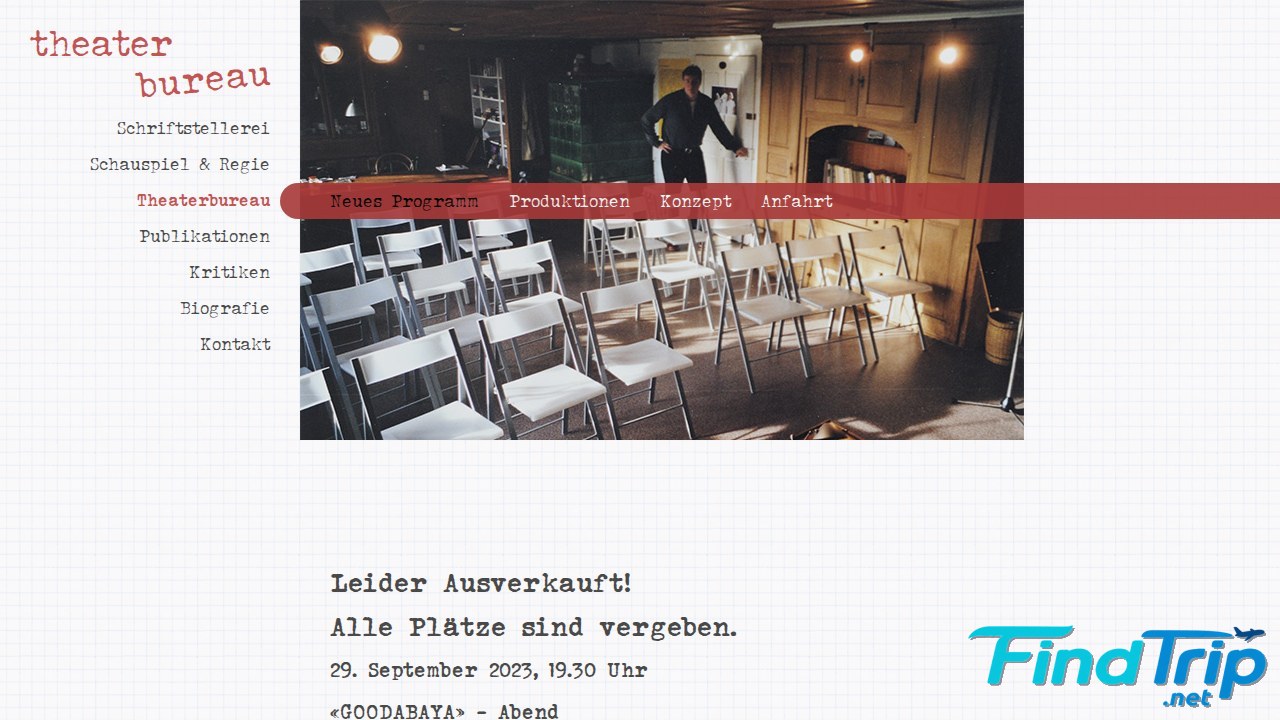
Theaterbureau is a specialized cultural venue and literary studio established by writer, actor, and director Hans Gysi in Märstetten, near the Lake Constance (Bodensee) region. Operating out of a small converted space that doubled as a working office and a micro-theater, it built a long-standing reputation for intimate readings, avant-garde music, small-scale stage plays, and literary book launches.
However, Theaterbureau is fundamentally distinct from standard civic theaters, commercial venues, or multi-stage entertainment complexes. It was created around a hyper-specific artistic vision and a very small physical footprint. Before exploring its history or looking into works associated with its team, travelers and cultural enthusiasts should understand its clear operational boundary lines.
---
1. Why Theaterbureau Is Not Designed for a General Audience
If your idea of an evening at the theater involves a multi-tier auditorium, grand stage sets, an expansive bar lobby, and broad mainstream comedy or musical revues, Theaterbureau will not match your expectations.
The venue was deliberately conceived as a minimal, highly concentrated space for direct cultural exchange rather than mass entertainment. It catered strictly to lovers of spoken-word poetry, niche contemporary drama, free-improvisational music, and localized Swiss-German literature. The audience was never meant to sit back anonymously in the dark of a massive hall; attendance meant sitting mere meters away from the performers, sharing a single room, and participating in an intimate post-show conversation over homemade baked goods.
For casual tourists looking for popular evening entertainment, quick impulse ticketing, or family-friendly spectacle shows, this setup presents immediate friction. Recognizing these boundaries upfront prevents misaligned expectations.
---
2. Three Hard Limitations You Must Consider
Understanding the practical limits of Theaterbureau requires looking closely at its actual operational structure, physical capacity, and programming scope.
| Operational Aspect | Standard Regional Theater | Theaterbureau |
| :--- | :--- | :--- |
| Seating Capacity | 150 – 500+ seats | 28 – 30 seats maximum |
| Ticketing System | Online box office / Automated | Direct SMS / Phone / Email reservation |
| Programming Focus | Broad public appeal, touring acts | Contemporary poetry, improvised jazz, experimental readings |
| Foyer & Catering | Commercial bar, full café | Informal apéro with home-baked cake (no coffee service) |
| Current Stage Activity | Ongoing seasonal schedules | Physical venue closed (Farewell held Sept 2023) |
Limitation 1: Extreme Physical Capacity and Venue Closure Status
The most significant limitation of Theaterbureau is its physical scale and current operational status. The physical room in Märstetten was designed to accommodate only 28 to 30 visitors at maximum capacity. This meant that events sold out almost immediately upon announcement, requiring mandatory advance bookings via direct phone calls or emails to the founder.
More importantly, potential visitors must note that the physical stage at its long-time Märstetten address officially concluded its regular venue operations. After 19 years of continuous programming (2004–2023), Hans Gysi hosted the final official farewell performance—titled «GOODABAYA» - Abend / pocketsongs+noise—on September 29, 2023, followed by a flea market to clear the studio inventory.
Because no successor took over the venue space, Theaterbureau no longer functions as a walk-in, weekly physical theater hall. Any ongoing artistic activities, poetry publications, or readings tied to its brand now take place off-site in external cultural centers, planetariums, or partner venues across the wider region.
Limitation 2: Unapologetically Niche and Experimental Programming
The artistic portfolio of Theaterbureau was never curated to suit general commercial tastes. Instead of broad-appeal musicals or famous touring acts, the stage focused almost exclusively on:
- Experimental spoken-word and poetry: Readings of contemporary lyric poetry (such as works published through Verlag edition 8 like generalprobe or ein tag mit chiligeschmack).
- Avant-garde musical improvisations: Collaborations involving unconventional instrumentation, such as bass flutes, sound stones (Klangsteine), toy pianos, and vocal soundscapes (e.g., performance groups like Seelenhäger inc. or B.A.Bam).
- Literary literary revues and staged dialogue: Intimate two-person plays (such as A.R. Gurney’s Love Letters or adaptations of Aglaya Veteranyi’s texts) that heavily depend on deep linguistic nuance and focused listening.
For listeners who do not speak fluent German or who lack an interest in abstract, experimental soundscapes and regional Swiss literature, these programs can feel opaque or overly challenging.
Limitation 3: Minimal Infrastructure and No Commercial Amenities
Unlike standard commercial venues, Theaterbureau operated with the minimal infrastructure of an artist's personal workspace.
- No automated ticketing: Visitors could not purchase digital tickets through commercial event platforms. Booking was handled personally by phone or email.
- Informal, home-style reception: Instead of a commercial bar with a full drink and food menu, the post-show reception consisted of a casual apéro with homemade cakes baked by the founder’s family, alongside simple beverages (wine, beer, and water). Notably, historical performance bills explicitly noted that coffee was not served on-site.
- No dedicated foyer or parking complex: The venue sat within a local village neighborhood setup, offering no massive underground garage or expansive waiting lounges.
---
3. Who Theaterbureau and Its Programs Are Actually For
Despite these severe physical and structural constraints, Theaterbureau built a dedicated, loyal following over two decades. The format remains valuable for specific types of culture seekers who deliberately avoid commercialized entertainment.
```
[ Cultural Audience Profile ]
|
+--------------------------+--------------------------+
| |
[ Intimate Stage Enthusiasts ] [ Literary & Avant-Garde Seekers ]
| |
• Seeks direct artist contact • Prefers free-form poetry
• Enjoys post-show apéro conversations • Values regional Swiss-German writing
• Prefers small 30-seat spaces • Interested in acoustic experiments
```
Intimate Stage Enthusiasts
If you enjoy sitting within arm's reach of actors and musicians, Theaterbureau's style represents the pure essence of chamber theater. The tiny room eliminated the fourth wall completely. Every intake of breath, string vibration, and spoken whisper was directly shared between the artist and the 30 audience members.
Fans of Independent Swiss Literature and Spoken Word
For readers following contemporary literature published by independent Swiss houses (such as edition 8), events organized by Hans Gysi served as vital living archives. The space frequently hosted local literary figures (such as Ursula Schweizer, Gianni Kuhn, and Paul Steinmann) reading original short stories, morning radio sketches, and regional poetry.
Admirers of Unconventional Acoustic Experiments
Audience members who appreciate free jazz, non-standard classical arrangements, and acoustic experimentation found a rare testing ground here. Programs often brought together classical singers, percussionists, cellists, and spoken-word performers in unpredictable, work-in-progress formats where spontaneous improvisation took center stage over rigid choreography.
---
4. Summary and How to Approach Theaterbureau Today
Theaterbureau represents a distinct, highly personal chapter in the regional cultural landscape of the Lake Constance and Thurgau border area. It was never built for mass tourism, spontaneous walk-ins, or broad public spectacle. Its extreme space limitations (28–30 seats), uncompromising experimental repertoire, and informal house rules made it a special destination solely for dedicated arts enthusiasts.
If you are looking to experience work associated with Theaterbureau today:
1. Do not travel to the physical studio expecting a walk-in show: The original venue in Märstetten ended its regular internal season in September 2023.
2. Track individual artist publications and external appearances: Follow the published literature of Hans Gysi through independent bookstores or press outlets (such as edition 8).
3. Check regional cultural calendars: Artists formerly associated with the venue regularly perform in larger regional spaces, such as local planetariums, cultural centers, or partner theaters across Eastern Switzerland and southern Germany.
By keeping these realistic constraints in mind, you can appreciate the legacy of Theaterbureau for what it truly was: an uncompromising, hyper-intimate laboratory for speech, sound, and personal cultural exchange.
---