The Polisher at Fyfield Down: Visitor Guide to Wiltshire's Ancient Polissoir
Essential visitor guide to The Polisher at Fyfield Down, Wiltshire. Discover practical tips, history, and navigation advice for this rare Neolithic polissoir.
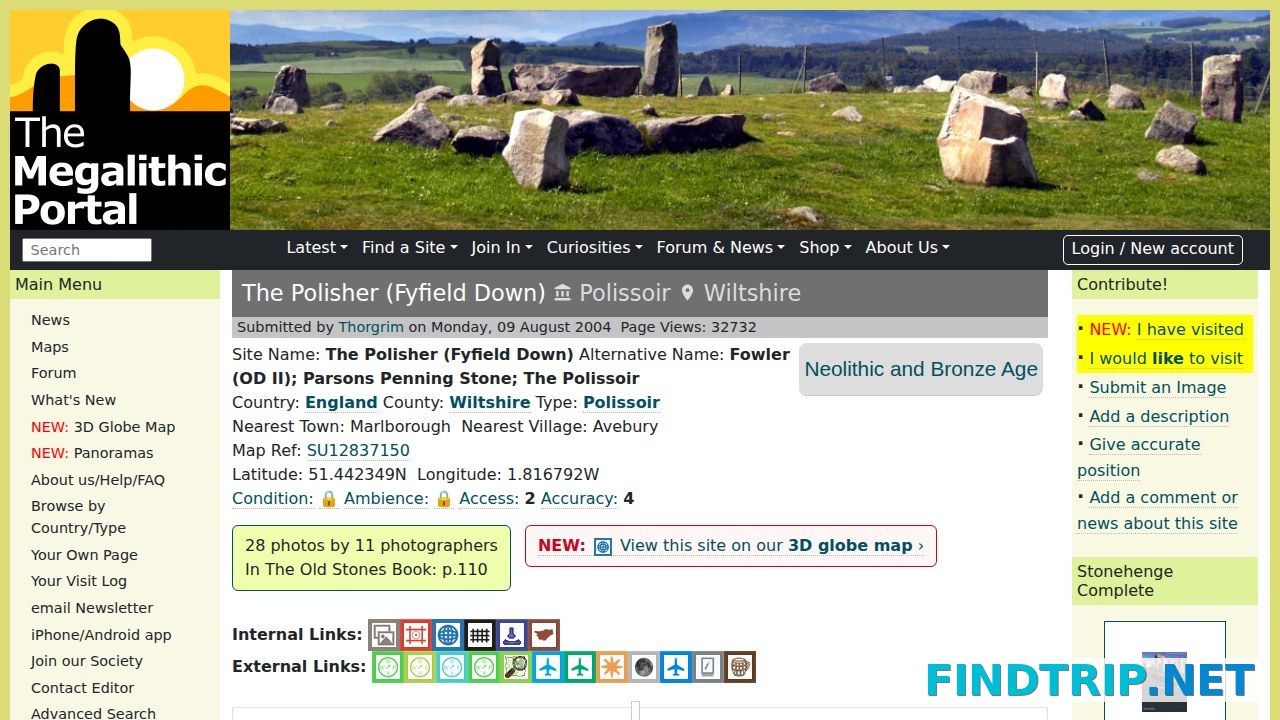
Locating The Polisher on Fyfield Down is not a typical sightseeing outing. Tucked away within the windswept landscape of the Marlborough Downs near Avebury, this rare Neolithic polissoir (axe-polishing stone) presents immediate physical and navigational challenges. Visitors expecting clear directional signs, paved footpaths, or on-site information boards will find none here.
Finding the stone requires crossing open pastureland and navigating undulating terrain with no official trail markers guiding the way. The location is completely exposed to the elements, offering zero shelter from heavy rain, strong winds, or direct sun. Furthermore, because the monument rests low against the landscape among scattered sarsen stones, it is exceptionally easy to walk right past it without noticing. Without precise coordinates or familiar visual landmarks, first-time visitors frequently spend hours searching the downland in vain.
Essential Details to Review Before Planning Your Visit
Because The Polisher is situated on working agricultural and conservation land without direct vehicle access, thorough preparation before leaving home is critical.
- Geographic Coordinates and Mapping: Do not rely on general street navigation apps. Before setting out, load the precise coordinates (51.442349 N, 1.816792 W or OS Grid Reference SU 1283 7150) into a dedicated offline GPS or mapping application. Mobile signal across Fyfield Down can be inconsistent.
- Terrain and Access Routes: The stone is accessible via public footpaths connecting to The Ridgeway National Trail and routes leading from West Overton or Avebury. Expect a walk ranging from 1.5 to 3 miles each way depending on your starting point. The paths cross uneven grass, chalk trails, and active farmland, requiring sturdy, waterproof footwear.
- Visual Cues: Seasoned field researchers recommend looking for specific physical indicators in the landscape. A distinct, triangular sarsen stone situated nearby serves as a primary visual landmark when scanning the downland.
- Site Etiquette and Preservation: The stone is a delicate historic survival. Visitors must refrain from using chemicals, hard tools, or abrasive cleaning on the surface. Touching the stone gently with bare hands is permitted, but disturbing the surrounding soil or leaving rubbish behind must be strictly avoided.
Architectural and Historical Significance of the Polissoir
For those who navigate the open downland successfully, The Polisher offers a direct, tangible link to Britain’s Neolithic past. Unlike standing stone circles designed for communal ritual or territorial marking, this recumbent sarsen block served a purely functional—and deeply practical—purpose roughly 5,000 to 6,500 years ago.
The stone is one of the few surviving examples of a portable or stationary grinding bench in the British Isles. Its upper surface features two distinct working areas:
1. Linear Grooves: Deep, narrow channels ground into the hard sarsen surface. These were formed by ancient craftspeople sliding the narrow edges of stone axe heads back and forth, likely using water and loose sand as an abrasive paste to shape and sharpen the blades.
2. Smooth Dished Basin: A broad, hollowed-out area that feels remarkably smooth to the touch. This central depression was used to polish the flat broadsides of stone axes, removing surface irregularities and producing a refined finish.
Archaeological excavations conducted in the early 1960s revealed that the slab was originally set upright before falling. Evidence—including an iron wedge and a medieval coin discovered beneath the stone—indicates that attempts were made to split the sarsen during the 13th century AD. Despite this partial damage, the working surfaces remain exceptionally well preserved.
The site provides an immersive, atmospheric experience far removed from fenced-off tourist attractions. Sitting beside the stone on a quiet day, with Red Kites soaring above the downs, offers visitors a rare moment of reflection on the immense time and labor invested by prehistoric communities to craft essential tools.
Who Will Benefit Most from a Visit
Given its isolated nature and subtle physical profile, The Polisher is uniquely suited to specific types of travelers:
- Prehistoric Archaeology Enthusiasts: Field researchers and megalithic enthusiasts seeking rare, functional artifacts rather than grand structural monuments will find the site deeply satisfying.
- Long-Distance Walkers and Hikers: Hikers exploring The Ridgeway or the broader North Wessex Downs AONB can easily integrate a visit into a longer trek.
- Travelers Seeking Solitude: Visitors looking to avoid the dense crowds commonly found at nearby Avebury Henge or Stonehenge will appreciate the tranquility of Fyfield Down, where you can often spend hours without encountering another person.
Conversely, families with small children requiring stroller access, individuals with mobility limitations, or casual tourists seeking quick roadside photo opportunities should reconsider visiting, as the physical effort required may outweigh the visual scale of the monument.
Final Assessment
A trip to The Polisher at Fyfield Down is rewarding if you are comfortable navigating open country on foot, prepared for variable weather conditions, and content with discovering a subtle, highly historical artifact in its natural setting.
---
Frequently Asked Questions
Is there an admission fee or visitor center at The Polisher?
No. The site sits on open, accessible downland with no entry fees, ticket booths, or staff facilities.
Can you drive directly to the stone?
No. Vehicles must be parked at designated trailheads near Avebury, Lockeridge, or along local country lanes, followed by a multi-mile hike along public footpaths.
How long should I plan for a trip to see the stone?
You should allow at least 2 to 3 hours for the round-trip walk and time spent exploring the site, depending on your walking pace and starting location.