Royate Hill Local Nature Reserve: Bristol Viaduct Sanctuary
Explore Royate Hill Local Nature Reserve in Bristol. Discover its railway viaduct history, wildflower meadows, trails, and practical visiting tips.
Tucked away in the vibrant BS5 district of Eastville, Royate Hill Local Nature Reserve stands as one of Bristol’s most intriguing urban green spaces. Unlike typical municipal parks with manicured lawns and playground equipment, this site is an atmospheric blend of Victorian industrial heritage and untamed woodland. Constructed in the 1870s as an embankment for the Clifton Extension Railway, the land was dramatically reclaimed by nature after train lines fell silent, eventually being saved from residential development by a passionate five-year local campaign in 1996.
Today, designated as a Site of Nature Conservation Interest (SNCI), the reserve offers a curious topography: wildflower meadows resting atop elevated railway embankments, woodland trails winding above the surrounding streets, and the gentle waters of Coombe Brook flowing beneath towering stonework arches. Yet, because of its unique physical layout and non-traditional infrastructure, visitors experience this sanctuary in vastly different ways. How you enjoy Royate Hill depends heavily on how you approach it—whether you are walking alone, exploring with a group, or simply passing through on a broader journey through Eastville.
---
Seeking Solitude: Why Royate Hill Calls the Solo Explorer
For the solo walker, urban noise can feel relentless. Royate Hill provides a rare feeling of literal and metaphorical elevation above the daily grind. Stepping off the residential pavement onto the woodland trail instantly changes the ambient sensory landscape.
What Solo Visitors Need
Those visiting alone generally seek quiet contemplation, personal safety, and rich biodiversity without the heavy foot traffic of major city parks. They want space to observe wildlife, take photographs, or read on a secluded bench.
Why the Reserve Delivers for Solitary Walkers
- Elevated Isolation: Walking along the upper ridge of the old railway embankment puts you level with the tree canopy. This high vantage point muffles street sound and offers a sense of privacy rarely found in inner-city neighborhoods.
- Rich Wildlife Spotting: Because human traffic remains modest compared to larger parks, solo visitors who move quietly stand a great chance of spotting songbirds, insects along the meadow trail, and aquatic life around Coombe Brook.
- Uninterrupted Peace: There are no organized sports grounds or commercial stalls, meaning solitude is rarely interrupted by loud crowds.
Practical Considerations for the Solo Visitor
- Safety & Vision Lines: The dense woodland cover and secluded embankments mean line-of-sight can be limited in certain bends. While the neighborhood actively looks out for the site, solo walkers should remain aware of their surroundings, particularly during late afternoon or twilight hours.
- Challenging Footing: The steep terrain requires good balance. Wet leaf litter on the embankment paths can become slick, so sturdy footwear is essential if you are exploring on your own.
---
Gathering in the Wild: Navigating Royate Hill with Groups and Community Walking Squads
Visiting a nature reserve as a group—whether with family, local walking clubs, or volunteer conservation teams—requires a different set of priorities. For groups, shared discovery and accessible social space are paramount.
What Groups Need
Group outings thrive on fascinating historical context, clear focal points for conversation, and predictable physical accessibility. They also require logistical clarity regarding facilities such as restrooms and seating.
The Group Appeal: History and Grassroots Conservation
- A Rich Historical Story: Groups will find plenty to discuss while exploring the remaining 1870s railway engineering. Standing atop or beneath the grand stone arches where steam trains once crossed provides a tangible connection to Victorian industrial history.
- Community Spirit: The site is a triumph of local activism. Saved after a high-profile effort led by the Avon Wildlife Trust and neighborhood residents, the reserve continues to flourish thanks to the Friends of Royate Hill Nature Reserve. Learning about or participating in their conservation work offers an inspiring focal point for community-minded visitors.
- Varied Micro-habitats: Walking together through distinct ecological zones—from dark, cool brook-side woodland to sunlit wildflower patches—keeps educational strolls engaging for mixed-age gatherings.
Key Barriers for Group Visits
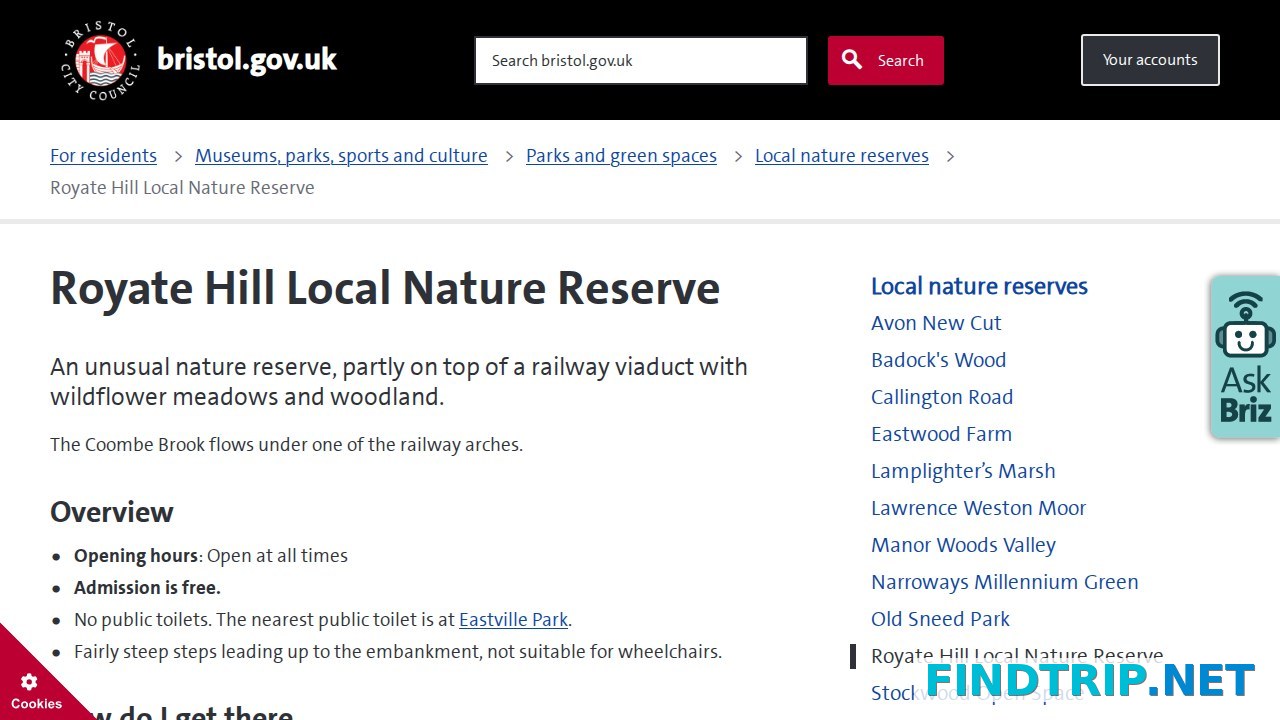
- Complete Lack of On-Site Facilities: Organizers must take note that there are no public toilets on-site. The closest public restrooms are located a short distance away at Eastville Park, making advanced planning necessary for longer group visits or trips with children.
- Accessibility Roadblocks: The reserve features fairly steep steps leading up to the main embankment. The rugged, unpaved terrain is not suitable for wheelchairs, mobility scooters, or pushchairs. Groups with members who require step-free access will find the terrain severely restrictive.
---
On the Move: How Day-Trippers and Passers-by Experience the Reserve
Not everyone visits Royate Hill as a destination in itself. For urban hikers, local commuters, and day-trippers exploring Eastville’s green network, the reserve acts as a fascinating detour along a broader route.
What Passers-by Need
Transients and casual wanderers need clear entry markers, concise walking loops, and effortless connection to neighboring local attractions.
Why It Works as a Quick Stopover
- Convenient Urban Location: Located off Royate Hill and Edward Street, directly adjacent to Greenbank Cemetery, the reserve is easy to drop into while walking through northeast Bristol (BS5).
- High-Impact Visual Contrast: Within just fifteen minutes, a passer-by can leave the urban grid, climb onto an elevated wildflower embankment, gaze down at Coombe Brook, and admire the massive brickwork of the viaduct arches.
- 24/7 Free Access: With no admission fee and 24-hour access, visitors can integrate a brief walk through the trees into early morning runs or late afternoon strolls without worrying about gate-closing times.
Tips for the Casual Wanderer
- Unobtrusive Entry Points: The entrance off Edward Street near Greenbank Cemetery is easy to miss if you aren't actively searching for it. Look out for local nature reserve signage near the street boundary.
- Parking Limitations: There is no dedicated parking lot for the reserve. Passers-by arriving by vehicle must rely on quiet residential street parking nearby, making public transit or foot travel the far better choice.
---
Final Verdict: Choosing Your Way to Explore Royate Hill
Royate Hill Local Nature Reserve is a remarkable example of how wild nature can reclaim industrial architecture, but it demands that visitors meet it on its own terms.
- Choose a Solo Visit if: You want an immersive, quiet hour amidst the tree canopy to observe urban wildlife, clear your mind, and take in the historic railway atmosphere without modern distractions.
- Choose a Group Visit if: You are interested in local history, ecology, or community conservation—provided everyone in your party is comfortable with steep stairways, uneven paths, and no public restroom facilities.
- Choose a Pass-Through Visit if: You are mapping out a wider neighborhood walk through BS5, combining a quick, picturesque stroll along the viaduct embankment with visits to nearby landmarks like Eastville Park or Greenbank Cemetery.
By matching your expectations to the unique physical reality of this elevated sanctuary, Royate Hill delivers a memorable glimpse into Bristol's hidden natural and industrial heritage.