Ringwood Meeting House & History Centre: Walking Route & Stops Inside
Plan your route inside Ringwood Meeting House & History Centre: what to see first in the 1727 box-pew chapel, what to skip when short on time, and opening hours.
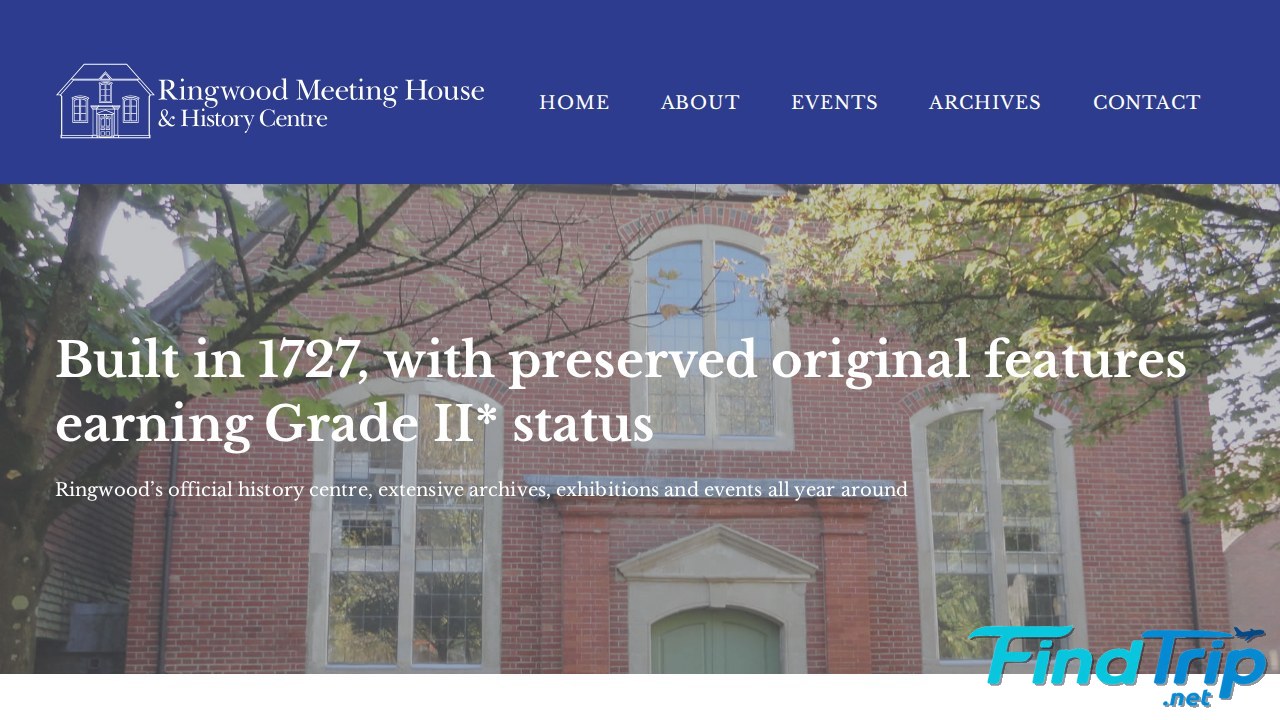
Stepping inside Ringwood Meeting House & History Centre feels like crossing straight back into the 1720s—provided you time your walk well. Because the building opens only in the mornings on most days, knowing where to linger and what to pass by makes a real difference. Below is a straightforward route through its historic chapel space, upstairs or gallery displays, and local archives so you don't run out of time before closing.
Which Way to Walk Inside (And Why There’s No Map)
Before you set off for 22 Meeting House Lane, Ringwood, BH24 1EY, it helps to know that the centre does not publish an internal floor map online. You won't be able to trace room numbers or staircases ahead of time, and you should confirm your exact bearings once you step inside.
Even without a printed route map, the building's layout naturally divides into distinct areas that work best in a history-first, research-second sequence:
- Start at the forecourt: Check what is happening outside before entering, as temporary community exhibitions occasionally use the forecourt space.
- Move into the main 1727 chapel interior: Take in the surviving 18th-century architecture and box pews right away while the room is quiet.
- Continue to the galleries: Follow the permanent exhibition panels to get the broad sweep of Ringwood's centuries-long history.
- Finish in the History Centre archives: End your loop browsing the vast collection of old local photographs and historical records—especially if you still have spare minutes on the clock.
Why does this order matter? Because opening hours are compact. From Monday to Saturday, the centre opens strictly from 10:00 AM to 12:00 PM. Only on Wednesday (Market Day) do the doors stay open later, running until 2:30 PM. Walking straight into the chapel and permanent galleries first guarantees you see the headline heritage pieces even if you arrive at 11:00 AM on a weekday morning.
Must-See Stops Inside the Meeting House
If you only have an hour—or want to anchor your visit around the spaces that make this venue genuinely rare—focus your attention on these two core areas.
The Original Box Pews and 1727 Chapel Interior
The centrepiece of any visit is the main hall itself. Built in 1727, this former 18th-century Presbyterian chapel is now the only dissenting Meeting House in Hampshire to survive from before 1800 in a virtually unaltered state. That distinction isn't just local pride; the building holds a Grade II\* listing specifically in recognition of its outstanding national merit and the survival of its original box pews.
Take five or ten minutes simply to walk around and look closely at the woodwork and proportions. Unlike many historic chapels that were stripped out or heavily converted over the centuries, this interior preserves the feel of an 18th-century dissenting congregation space. A total restoration completed in 2011—made possible by grants from the Heritage Lottery Fund and other benefactors—brought the fabric back to crisp condition without erasing its original character.
While standing in the main hall, pay attention to the acoustics. Although the building long since closed as a chapel and now serves as Ringwood's official history centre and a community social hub, the room's sound quality remains one of its defining traits. Singers and musicians favour the space for chorale performances, organ recitals, folk groups, and twice-monthly Jazz nights. It is also licensed for wedding ceremonies, so as you stand among the box pews, it's easy to picture how naturally the room shifts from daytime heritage site to live performance venue.
The Galleries and Permanent Ringwood Exhibition
Once you've taken in the ground-level chapel architecture, head for the galleries. This is where the building shifts from architectural specimen to local storytelling hub. The galleries house the permanent exhibition depicting the history of Ringwood, told through graphic displays designed for everyday visitors rather than academic specialists.
Ringwood's past stretches back many centuries, and these gallery panels do the heavy lifting of connecting the dots quickly. Rather than trying to interpret loose documents on your own, you get a structured overview of how the market town evolved over time. For first-time visitors to Ringwood, pairing the 1727 chapel floor with the gallery exhibition gives you the clearest, fastest sense of both the building and the town around it.
What to Skip If You Are Short on Time
With just a two-hour window from Monday to Saturday (excluding Wednesday), arriving slightly late or stopping for market errands can leave you with 30 to 45 minutes inside. If the clock is ticking toward noon, here is what you can safely trim without missing the soul of the place.
Deep-Dive Browsing in the Extensive Archives
The History Centre maintains extensive archives, including a deep collection of old local photographs and historical material documenting Ringwood's past. For genealogy researchers, long-time residents, or visitors hunting down a specific street or ancestor, this room can easily absorb an entire morning.
For a casual sightseer on a tight schedule, however, full archive browsing is the first thing to skip. Sifting through photographic collections and local research folders rewards unhurried reading, not a hurried glance ten minutes before closing. If you're short on time, walk past for a quick look at what's on display, then save proper archive time for a Wednesday Market Day visit when the afternoon hours give you room to settle in.
Temporary Forecourt and Local Group Exhibitions
Alongside its permanent displays, Ringwood Meeting House & History Centre hosts a rotating calendar of temporary exhibitions. These cover everything from local artists and historical research to activities run by Ringwood community groups, set up either indoors or outside on the forecourt.
Because the programme changes throughout the year, its appeal depends heavily on what happens to be running the week you visit. If you're pressed for time and the temporary display doesn't immediately catch your eye, walk right past the forecourt setup and invest those minutes inside the Grade II\* listed chapel and the permanent gallery displays instead.
(Note: Admission fees, on-site parking details, and Wi-Fi availability are not listed on the centre's website, so plan for a quick check on arrival or call ahead if you need practical details before travelling.)
Practical Advice to Wrap Up Your Visit
To get the most out of Ringwood Meeting House & History Centre without feeling rushed out the door at noon, build your visit around a few simple decisions:
- Pick Wednesday if you like slow visits: Wednesday is Market Day in Ringwood, and the centre stays open from 10:00 AM to 2:30 PM. That extra two and a half hours turns a rushed morning loop into an unhurried look through both the permanent galleries and the old photograph archives.
- Arrive at 10:00 AM sharp on other days: On Monday, Tuesday, Thursday, Friday, and Saturday, doors close at 12:00 PM. Reaching 22 Meeting House Lane right at opening gives you the full two hours to see the box pews, read the gallery displays, and still browse a few local archive photos.
- Check evening or event schedules separately: Daytime visits let you inspect the 1727 woodwork in peace, while attending one of the twice-monthly Jazz nights, folk evenings, organ recitals, or chorale performances lets you experience the building's celebrated acoustics firsthand.
- Call ahead for archive or hire enquiries: If you want to verify what temporary exhibition is currently showing, check specific archive access, or ask about venue hire and wedding licensing, ring the office on 01425 480656 (an answerphone is available if no one picks up immediately).