Kate Mullany House: Visitor Guide & Historic Significance
Essential visitor guide for the Kate Mullany House in Troy, NY. Learn about access rules, restoration status, and the history of America's first female union.
Planning a trip to a landmark of American labor history requires accurate expectations, especially when visiting sites preserved for specialized historical research rather than mass tourism. The Kate Mullany House, located at 350 8th Street in Troy, New York (serving the greater Albany area and Capital District), stands as a monumental point of interest for labor rights and women’s history. However, casual travelers expecting a typical drop-in museum experience may face unexpected obstacles if they do not prepare in advance.
Understanding the operational constraints, pre-visit requirements, and distinct historical context of this National Historic Site ensures a meaningful experience without missing crucial logistical steps.
---
Critical Operational Realities: Limited Access and Ongoing Restoration
The most vital factor to understand before adding the Kate Mullany House to your travel itinerary is its operational status. Unlike heavily staffed national parks or mainstream city museums, this location operates under specific physical and administrative parameters:
- No Regular Public Visiting Hours: The site does not maintain daily open hours for spontaneous walk-in visits. Visitors who arrive without prior arrangements will find the doors closed to the general public.
- Ongoing Restoration Efforts: The property continues to undergo active restoration and historic furnishing development. Because portions of the structure are frequently undergoing physical preservation, public access is restricted to safeguard both the structure and visitors.
- Administrative Usage: The building serves as the official administrative base for the American Labor Studies Center (ALSC), a non-profit entity dedicated to integrating labor history into K-12 education. Its primary daily function is educational outreach and preservation management rather than standard tour operations.
Attempting a drop-in visit without confirming availability in advance will likely result in viewing the building strictly from the exterior sidewalk.
---
What to Verify on the Official Portal Before Setting Out
To prevent unnecessary travel disruptions, visitors must perform due diligence via the official Kate Mullany National Historic Site communications channels prior to making travel arrangements.
```
+-------------------------------------------------------------------+
| PRE-VISIT CHECKLIST |
+-------------------------------------------------------------------+
| [ ] Contact ALSC via phone (518-331-4474) or email in advance |
| [ ] Confirm availability for private or small-group access |
| [ ] Review online educational modules and history materials |
| [ ] Verify current status of local labor trail walking routes |
+-------------------------------------------------------------------+
```
Direct Communication is Mandatory
Because the site lacks a traditional ticket office, potential visitors must establish direct contact with the site administration.
1. Phone Scheduling: Direct inquiries regarding potential visits or group access should be made to the American Labor Studies Center at (518) 331-4474.
2. Email Coordination: Written inquiries regarding research, specialized visits, or updates on the building's status can be directed to executive leadership via the contact information provided on the official website.
3. Digital Preparation: Visitors are strongly encouraged to examine the digital resources available on the site—including downloadable PowerPoint presentations, historical background documents, and lesson plans—to gain full context prior to any confirmed on-site visit.
---
The Historical Substance: Why the Location Holds Profound Cultural Weight
Despite limited walk-in accessibility, the Kate Mullany House remains a site of immense historical and cultural value. Its significance stems directly from the pioneering achievements of its namesake and the industrial history of Troy, New York.
The Legacy of Kate Mullany and the Collar Laundry Union
In the 1860s, Troy was a major industrial center known as the "Collar City," producing the vast majority of the nation's detachable shirt collars and cuffs. The work inside the collar laundries was grueling, involving long hours, exposure to severe heat, hazardous chemicals, and extremely low pay.
In February 1864, Kate Mullany, a 19-year-old Irish immigrant, organized the Collar Laundry Union, the first sustained all-female labor union in the United States.
- The 1864 Strike: Mullany led more than 300 female laundry workers in a coordinated strike across 14 commercial laundries, successfully demanding a 20 to 25 percent wage increase and improved working conditions.
- National Leadership: Her organizational talents caught the attention of national labor leaders. In 1868, National Labor Union President William H. Sylvis appointed Mullany as an assistant secretary, making her the first woman to hold an officer position in a national labor union.
Official Historic Designations
Recognizing its pivotal role in American social history, the property has received several major designations:
- National Historic Landmark (1998): Declared by the Secretary of the Interior for its national significance in American history.
- National Historic Site Affiliated Unit (2005): Designated by the U.S. Congress as an affiliated unit of the National Park System.
- National Women's Hall of Fame & International Labor Hall of Fame: Honors recognizing Kate Mullany’s lasting contribution to workers' rights nationwide.
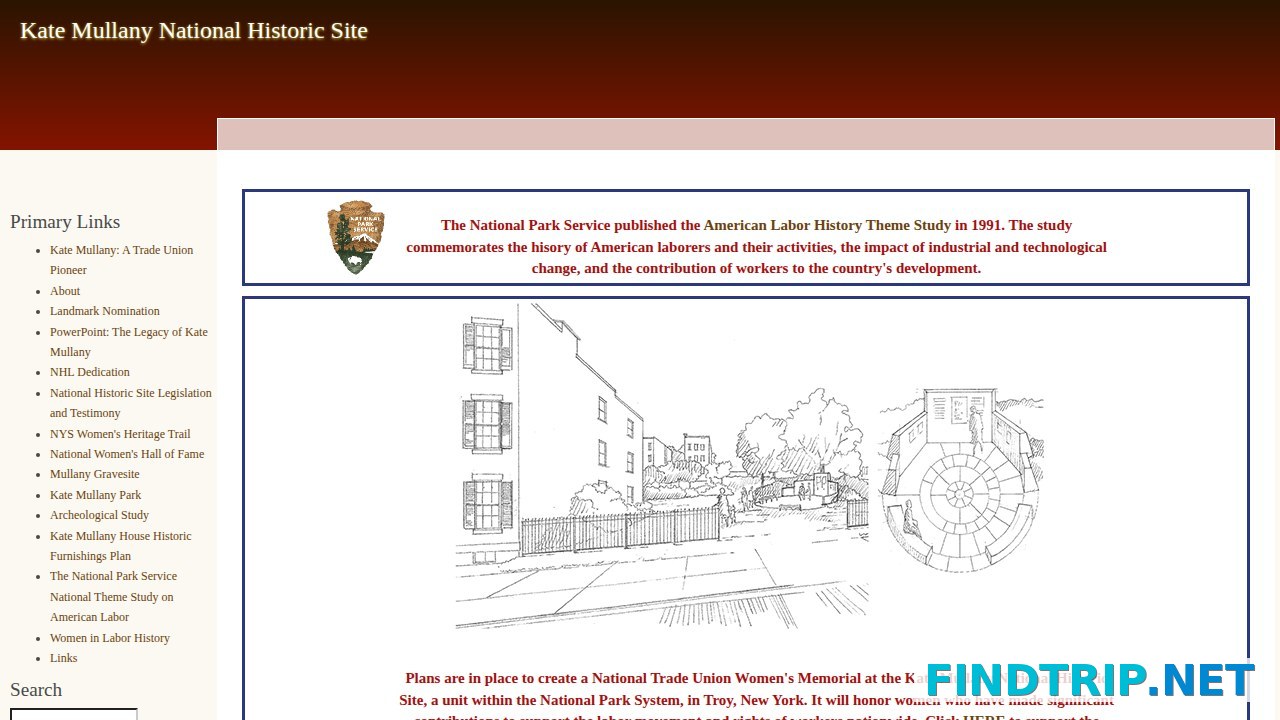
Plans are also underway at the site to establish a dedicated National Trade Union Women's Memorial to honor women who have shaped the labor movement across the United States.
---
Target Audience: Who Benefits Most From Engaging With This Site
Given its unique nature as an educational hub under restoration, certain categories of visitors will find engagement with the Kate Mullany House exceptionally rewarding, while others may prefer alternative regional destinations.
Ideal Visitors for This Site
- Labor History Advocates and Union Members: Individuals seeking a meaningful connection to early trade union history will appreciate standing before the physical residence of a true labor pioneer.
- Educators and Academic Researchers: Teachers and historians seeking authentic primary-source context, curriculum materials, and lesson plans on 19th-century industrialization and women's rights will find the site's educational center highly valuable.
- Heritage Tourists on Planned Itineraries: Travelers who are already exploring the broader New York State Women's Heritage Trail or the industrial heritage of Albany and Rensselaer Counties—and who take the time to arrange appointments in advance—will gain deep insight into regional history.
Who Might Want to Reconsider
Casual tourists looking for a standard museum experience with guided walkthroughs every half-hour, gift shops, and interactive displays may find the site's restricted access challenging. Those unable to book in advance should focus on exterior viewing as part of a broader self-guided architectural walk through historic Troy.
---
Final Considerations
A visit to the Kate Mullany House is highly worthwhile if you accept that in-person interior access requires advance planning and confirmation. Rather than serving as a standard commercial tourist stop, the house functions as a living monument, preservation project, and educational headquarters. By contacting the American Labor Studies Center ahead of time and reviewing the available historical materials online, visitors can fully appreciate the groundbreaking legacy of Kate Mullany and the enduring impact of early female union organizers on American labor rights.
---