Feuchtmayer Museum: Visitor Fact Sheet and Cultural Guide
Essential visitor information, historical background, exhibit details, and operating schedules for the Feuchtmayer Museum in Salem-Mimmenhausen, Germany.
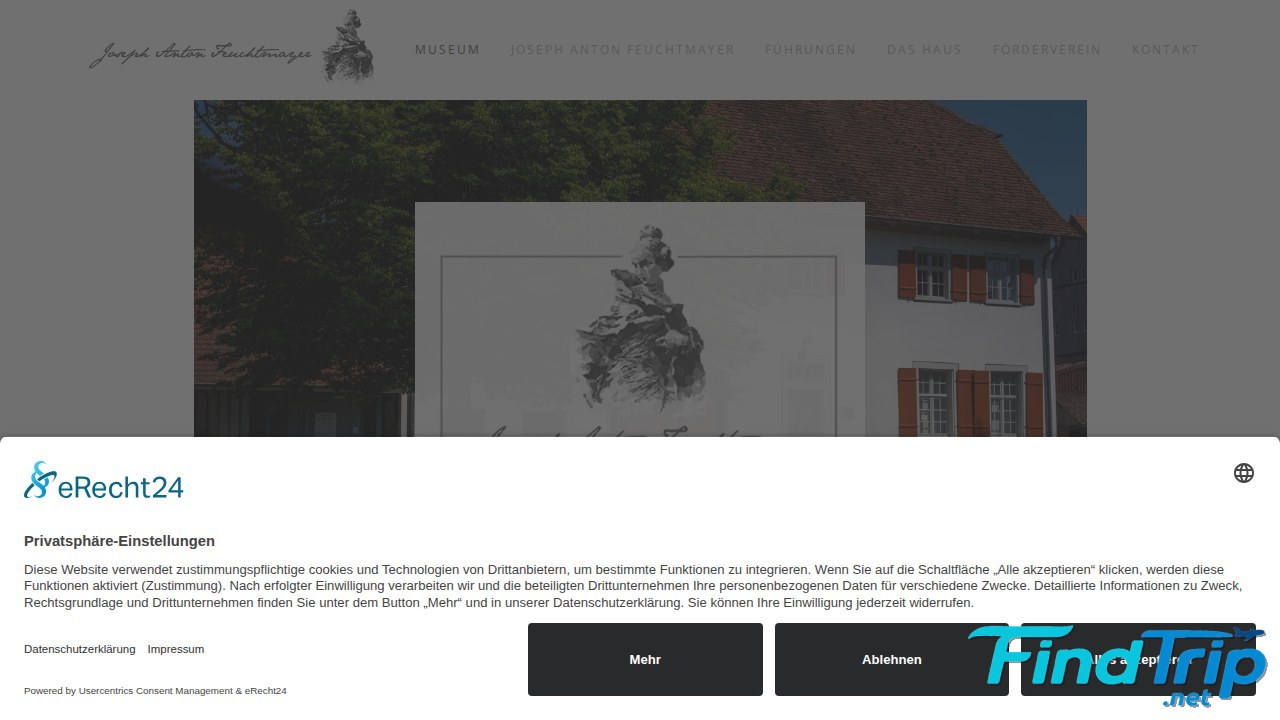
The Feuchtmayer Museum in Salem-Mimmenhausen offers a dedicated look into the life, workshop practices, and Rococo craftsmanship of master sculptor and plasterer Joseph Anton Feuchtmayer. Situated in the historical Bodenseekreis region of Baden-Württemberg, this specialized memorial site introduces visitors to the technical mastery behind South German Baroque art.
Essential Venue Information
Below is a summary of the published factual parameters and visiting details for the Feuchtmayer Museum, based on currently available institutional documentation:
- Official Name: Feuchtmayer Museum (also referred to as Feuchtmayerhaus or Feuchtmayer-Museum)
- Physical Address: Tüfinger Str. 10 (also listed as Tübinger Str. 10), 88682 Salem-Mimmenhausen, Bodenseekreis, Baden-Württemberg, Germany
- Official Website: [https://www.feuchtmayermuseum.de/](https://www.feuchtmayermuseum.de/)
- Property Type: Historic Artist Residence, Studio Workshop, and Art History Museum
- Seasonal Operating Schedule: Open annually from Good Friday (Easter) through October 3rd
- Standard Opening Hours: Saturdays, Sundays, and official public holidays from 11:00 AM to 5:00 PM (Final admission permitted until 4:30 PM)
- Standard Admission Fees:
- Adults: €4.50
- Students & School Pupils (with valid photo ID): €3.00
- Groups (10 or more visitors): €4.00 per person
- Echt Bodensee Card Holders: €4.00 per person
- Youth (up to 16 years old): Free admission
- Guided Tour Services: Available year-round (including outside standard regular hours) upon advance booking. Group tour surcharge is €25.00 in addition to the standard group admission fee.
- Support Organization Contact: Förderverein Feuchtmayerhaus Salem e.V. (Telephone: +49 (0)7553 7683 or +49 (0)7553 96910)
- Unconfirmed Details: Specific on-site barrier-free accessibility modifications, detailed public transit route connections, and exact winter maintenance schedules are not explicitly detailed in the source documentation and must be verified directly with the museum management prior to arrival.
---
Detailed Overview from Official Sources
Artistic Legacy of Joseph Anton Feuchtmayer
Joseph Anton Feuchtmayer was a celebrated woodcarver, stone sculptor, plasterer (stuccator), and altar builder who left a significant mark on Baroque and Rococo architecture throughout Central Europe. Born in 1696 in Linz an der Donau, Feuchtmayer spent much of his childhood and formative apprenticeship years in Schongau on the Lech River. His father, Franz Josef Feuchtmayer, had received regular commissions beginning around 1706 to rebuild the monastic buildings at Salem Abbey following a devastating fire in 1697, prompting the family’s relocation to the area around 1712.
Around 1721, Feuchtmayer acquired advanced techniques from Diego Francesco Carlone, a Northern Italian plasterer working at Weingarten Abbey. Carlone taught Feuchtmayer the "art of lusterwork" (Glanzarbeit), a specialized method for modeling independent stucco figures with highly polished, brilliant white surfaces that mimicked genuine Italian marble. Feuchtmayer mastered and expanded this stucco-alabaster technique north of the Alps.
Throughout his career, Feuchtmayer executed ornamental and figurative works in wood, stone, and plaster. His extensive portfolio includes assignments for the Abbey Church of Weingarten, the New Castle (Neues Schloss) in Meersburg, the Abbey Church of St. Gallen in Switzerland, the former Cistercian Abbey Church in Salem, and numerous regional churches stretching across the Upper Rhine to Fribourg. His most famous single creation remains the interior decorative program for the Birnau Abbey Church (Klosterkirche Birnau), which features the iconic sculpture known as the Honigschlecker ("Honey Licker"). Feuchtmayer resided in Mimmenhausen until his death in 1770.
Museum Layout and Curatorial Concept
The curatorial concept of the Feuchtmayer Museum, developed by art historian Dr. Marion Harder-Merkelbach, deliberately refrains from presenting a vast collection of original finished sculptures. Because Feuchtmayer’s primary masterpieces remain preserved in situ within regional churches, monasteries, and palaces where they are freely accessible to the public, the museum functions instead as an educational window into his creative process and historical context.
The exhibition is structured systematically around key thematic areas:
1. The Art of Drafting: Visitors begin by examining preliminary design drawings (Entwurfszeichnungen). These sketches served as crucial business tools that enabled Feuchtmayer to secure formal commissions from prospective clients and ecclesiastical patrons.
2. Workshop Operations: The ground floor displays illustrate the daily routine of an 18th-century sculptor’s studio, detailing the step-by-step creation and gilding of decorative elements such as putto heads.
3. Monastic Patronage: The upper floor focuses on Feuchtmayer’s complex professional relationship with Salem Abbey, highlighting his key patron, Abbot Anselm II, and detailing his monumental work on the Birnau pilgrimage church.
4. Plaster and Stucco Craftsmanship: The final section explores the technical execution of scagliola and plasterwork. Visitors can examine how ceiling plaster, decorative columns, and stucco figures were constructed, featured alongside an authentic section of original ceiling plaster salvaged from the former stables (Marstall) of Salem Castle.
A small institutional shop operates on site, offering educational souvenirs, literary guides, and miniature replica figurines of the Honigschlecker.
Structural History of the Feuchtmayerhaus
The physical building hosting the museum was originally constructed in 1691. Long referred to locally as the "House of the Sculptors" (Haus der Bildhauer), it became officially known as the "Feuchtmayerhaus" around 1990. Feuchtmayer purchased the property—then known as the Steuer- und Landschaftshaus—in 1730 from his primary employer, Salem Abbey. During the mid-to-late 18th century, it housed the famous Mimmenhausen Workshop (Mimmenhausener Werkstatt).
Following Feuchtmayer’s death in 1770, the workshop was maintained by his skilled successors, including his journeyman Johann Georg Dirr (1723–1779), his son-in-law Johann Georg Wieland (1742–1802), and potentially members of the extended Dirr family. Detailed architectural surveys of the building's facade have identified at least eight distinct construction phases over its history:
- Phase 1: Originally constructed with exposed timber-framing (Sichtfachwerk), which remained visible for a relatively short window of 20 to 30 years.
- Phases 2–4: At least four major structural modifications occurred before the second half of the 18th century. The third phase, completed in the early 1700s, gave the structure the principal architectural appearance it maintains today.
- 19th Century Transition: During the early 1800s, the workshop facility was converted into an agricultural barn and residence.
By 1990, when the Municipality of Salem acquired the Feuchtmayerhaus from private ownership, the structure was in a state of severe deterioration. A comprehensive restoration project was executed by the local municipality, funded jointly by the State Monument Foundation of Baden-Württemberg (Denkmalstiftung des Landes Baden-Württemberg) and the local support association (Förderverein Feuchtmayerhaus Salem e.V.). The former agricultural wing was converted into the Salem Municipal Library, while the historic residential wing was restored to host the Feuchtmayer Museum, which officially opened to the public in June 2000.
Visiting Parameters, Tours, and Special Events
The museum operates seasonally from Easter through October 3rd. Outside of standard weekend and public holiday opening hours, group visits and private educational tours are conducted year-round upon advance reservation through the support association.
In addition to standard historical tours, the Förderverein offers a specialized costumed narrative tour where a guide portrays Joseph Anton Feuchtmayer in historical attire, delivering a first-person account of 18th-century studio life.
The gallery space within the Feuchtmayerhaus periodically hosts temporary art exhibits. For example, special exhibitions such as "Unter Skandinaviens Himmel" (featuring works by artists Gertrud Manz and Sarah Bender) are presented in the upstairs gallery. Access to these temporary exhibitions is included free of charge during normal museum operating hours.
Literature and Academic References
For visitors and researchers seeking deeper academic context regarding Feuchtmayer's life and the history of the Mimmenhausen workshop, the museum highlights several standard reference works:
- Josef Anton Feuchtmayer 1696–1770 by Ulrich Knapp (Verlag Stadler Konstanz, ISBN: 978-3-7977-0346-0).
- Josef Anton Feuchtmayer by Wilhelm Böck (Verlag Ernst Wasmuth Tübingen, 1948).
- Das Geheimnis des Honigschleckers (2003) by Dr. Marion Harder-Merkelbach.
- Schach dem Abt by Hans Jensen (Herder Verlag Freiburg).
---
Editorial Review
The Feuchtmayer Museum serves as an indispensable educational prelude for travelers exploring the Baroque routes of Upper Swabia and Lake Constance. Rather than competing with grand regional monuments like the Birnau Pilgrimage Church or Salem Abbey, this intimate site focuses on explaining the material techniques, draftsmanship, and workshop realities behind 18th-century Rococo art. The careful preservation of the 1691 timber-framed residence, paired with Dr. Marion Harder-Merkelbach’s focused thematic curation, turns complex art history into an accessible experience. It provides visitors with the precise visual and technical vocabulary needed to fully appreciate the region's lavish church interiors.
---
Access and Further Information
For official inquiries, seasonal event updates, or to schedule a private group tour outside standard operating hours, consult the official communication channels provided by the operating association:
- Official Website: [Feuchtmayer Museum Website](https://www.feuchtmayermuseum.de/)
- Regional Destination Planning: Find and save historical destination profiles across Baden-Württemberg on [FindTrip](https://findtrip.net) using tracking reference `DE1788818897366`.
---
The Feuchtmayer Museum provides a fascinating look into the technical mastery and daily workshop life of one of South Germany's greatest Rococo sculptors.