Exploring the Burden Iron Works Museum: Troy's Industrial Legacy
Discover the Burden Iron Works Museum in Troy, NY. Explore 19th-century industrial history, steam engines, horseshoe mills, and expert visitor insights.
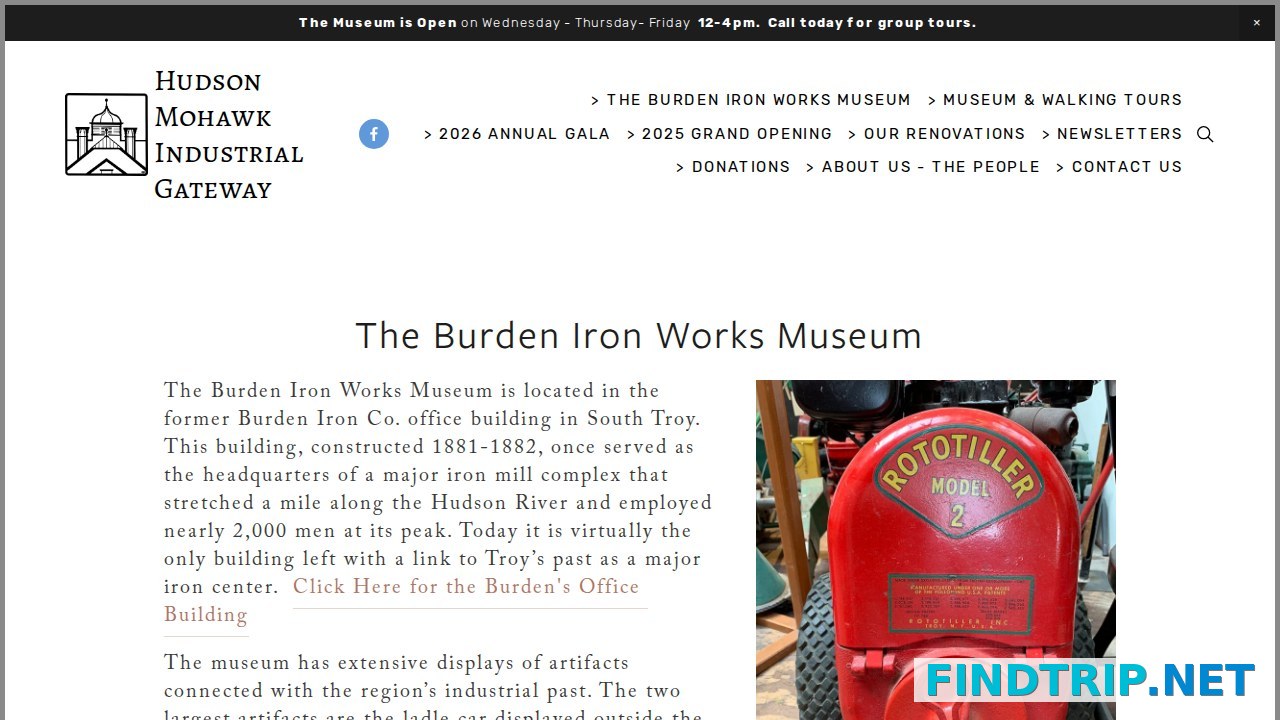
Nestled along the banks of the Hudson River in Upstate New York, the city of Troy holds a pivotal place in American industrial history. During the 19th century, this bustling region earned fame as a manufacturing powerhouse, fueling the nation’s Westward Expansion, the Civil War effort, and the American Industrial Revolution. Today, the centerpiece of this rich heritage is preserved inside the Burden Iron Works Museum.
Housed within the original 1881–1882 administrative office building of the legendary Burden Iron Company, this museum offers visitors an immersive window into an era driven by steam, iron, water power, and groundbreaking American ingenuity.
---
1. Overview & Historical Background
The Burden Iron Works Museum, operated by the Hudson Mohawk Industrial Gateway, stands as virtually the sole surviving structure of a massive industrial complex that once stretched over a mile along the Hudson River in South Troy. At its peak, the iron mill employed nearly 2,000 workers, producing high-grade iron products that shaped 19th-century infrastructure.
Constructed between 1881 and 1882, the Romanesque Revival-style office building itself is a masterpiece of architectural preservation. Following major exterior and structural renovations completed in recent years, the building functions as both a historical monument and a treasure trove of industrial artifacts. It serves as a physical reminder of Troy's past titles: the "Iron Center," the "Stove Capital of the World," and the birthplace of American precision instrument manufacturing.
---
2. Key Highlights & Main Experiences
Visiting the Burden Iron Works Museum isn't just about reading plaques on a wall—it is a hands-on exploration of mechanical marvels and social history. The museum houses a broad spectrum of fascinating exhibits:
The Legacy of Henry Burden & Machine-Made Horseshoes
At the heart of the museum is the story of Scottish inventor Henry Burden. Burden revolutionized horse transportation by developing a machine capable of producing a finished horseshoe every second.
- Working Water Wheel Diorama: One of the museum's prized displays is a working scale diorama depicting Burden's mill, driven by what was once hailed as the world's most powerful water wheel (60 feet in diameter).
Heavy Machinery: Steam Engines & Ladle Cars
- Corliss Steam Engine: Inside the museum hall stands a massive Corliss steam engine, showcasing the complex gearwork and mechanical power that replaced simple water power.
- Outdoor Ladle Car: Positioned outside the building, a preserved industrial ladle car offers guests a tangible sense of the immense scale of molten metal transportation used in 19th-century foundries.
Diverse Industrial Exhibits of the Hudson-Mohawk Region
Beyond iron working, the museum captures the wide array of industries that flourished around Troy:
- Cast Iron Stoves: Troy was famed globally for crafting elaborate, artfully designed cast-iron heating and cooking stoves.
- Bell Foundries: The region cast more bells than any other area in the United States, including the world-famous Meneely Bell Company products.
- Precision Scientific Instruments: Learn about the W. & L.E. Gurley Company and see the Ames Dividing Engine, an ingenious mechanism created to engrave degree markings on navigational compasses with microscopic accuracy.
- The USS Monitor Connection: Discover how Troy iron masters and local foundries produced key ironclad plates and rivet components for the iconic Union Navy Civil War ship, the USS Monitor.
- Textile & Detachable Collars: Troy earned the nickname "The Collar City" after the detachable shirt collar was invented here, establishing a dominant textile market that survived well into the 20th century.
- The Troy-Bilt Rototiller: The museum highlights how the Swiss-invented rototiller was brought to Troy in 1938 and perfected by Garden-Way into the famous Troy-Bilt A1 model, becoming a staple of American gardening history.
---
3. Practical Use-Cases: Who Should Visit?
The museum provides tailored value depending on your travel or research interests:
- History Enthusiasts & Researchers: Anyone studying the American Industrial Revolution, Civil War supply lines, or 19th-century architecture will find rich archival material and rare artifacts.
- Engineering & Technology Students: Mechanics and engineering aficionados can study early steam power, water wheel kinetics, and precision calibration tools firsthand.
- Educational Family Outings: School-age children interested in machinery, trains, and how everyday objects are made will enjoy the visible, tactile nature of the displays.
- Heritage Tourists: Visitors exploring the Hudson Valley and Capital District heritage trails can easily combine a trip here with walking tours of historic downtown Troy.
---
4. Pros and Cons of Visiting
To help you plan an efficient visit, here is a balanced evaluation of the museum experience:
Pros
- Rich, Authentic Collection: Covers a broad spectrum of local history—from horseshoe manufacturing and steam engines to bell casting and textiles.
- Architectural Significance: Housed in a beautifully restored 1880s industrial office building.
- Affordable Admission: At just $10.00 for adults and free entry for children 12 and under, it is one of the best budget-friendly cultural stops in the Capital Region.
- Expert Insight: Guided tours led by knowledgeable staff and volunteers from the Hudson Mohawk Industrial Gateway provide deep context that self-guided walks cannot match.
Nhược điểm / Cons
- Limited Seasonal & Weekly Hours: The museum is open seasonally from May through December, with public walk-in hours restricted to Wednesday through Friday (12:00 PM – 4:00 PM).
- Appointment Required for Weekends: Casual weekend visitors cannot drop in unannounced; weekend visits require scheduling a special appointment in advance.
- Compact Footprint: While dense with history, the physical site is small compared to national museums, taking approximately 1 to 2 hours to fully tour.
---
5. Expert Tips for Visitors
1. Book Ahead for Group Tours: If traveling with a group or visiting outside the standard Wednesday–Friday window (12:00 PM – 4:00 PM), contact Executive Director Dr. Susan M. Ouellette in advance to arrange a private appointment.
2. Combine with Regional Walking Tours: The Hudson Mohawk Industrial Gateway frequently hosts guided outdoor heritage walks around South Troy and along the Hudson River. Check their schedule before arriving.
3. Bring a Camera: The architectural details of the brick facade and the heavy metal gearwork inside the main exhibition room offer great photography opportunities.
4. Verify Seasonal Opening Dates: Since public drop-in operating months run strictly from May to December, double-check dates if planning an early spring trip.
---
6. Visitor Information Summary
| Information Category | Details |
| :--- | :--- |
| Address | 1 East Industrial Parkway, Troy, NY 12180, United States |
| Operating Season | May through December |
| Public Hours | Wednesday – Friday: 12:00 PM – 4:00 PM (Special tours by appointment) |
| Admission Fees | Adults: $10.00 \| Children 12 & Under: Free (with adult) |
| Managing Organization | Hudson Mohawk Industrial Gateway |
| Contact Phone | (518) 274-5267 |
| Contact Email | info@hudsonmohawkgateway.org |
---
7. Conclusion & Frequently Asked Questions
The Burden Iron Works Museum is an irreplaceable artifact of American heritage. By preserving the mechanical genius of Henry Burden and highlighting Troy’s diverse industrial achievements, the museum keeps the spirit of 19th-century innovation alive. Whether you are an industrial historian, an engineering fan, or a local traveler seeking authentic regional history, a visit here provides an informative and engaging step back in time.
Frequently Asked Questions (FAQ)
Q1: Do I need to buy tickets in advance to visit the Burden Iron Works Museum?
Answer: While walk-in tickets ($10.00 adult) can be purchased on-site during regular hours (Wed–Fri, 12 PM–4 PM, May–Dec), purchasing online or calling ahead is recommended, especially if you wish to guarantee a guided tour spot.
Q2: Is the museum accessible for children?
Answer: Yes! Children 12 and under enter for free when accompanied by an adult. The large machinery, dioramas, and working steam models make it a great educational stop for young learners.
Q3: How much time should I allocate for a visit?
Answer: Most visitors spend between 1 and 2 hours exploring the indoor exhibits, viewing the outdoor ladle car, and speaking with museum guides.
Q4: Can I schedule a tour on a weekend or during the off-season?
Answer: Special tours outside standard hours or during the winter off-season (January–April) can often be arranged by contacting museum management via phone at (518) 274-5267 or email at info@hudsonmohawkgateway.org.