Exploring Blakehill Farm Nature Reserve: A Visitor's Essential Guide
Discover Blakehill Farm near Cricklade, Wiltshire. Former WWII airfield turned 264-hectare meadow nature reserve. Free entry, flat trails, birdwatching.
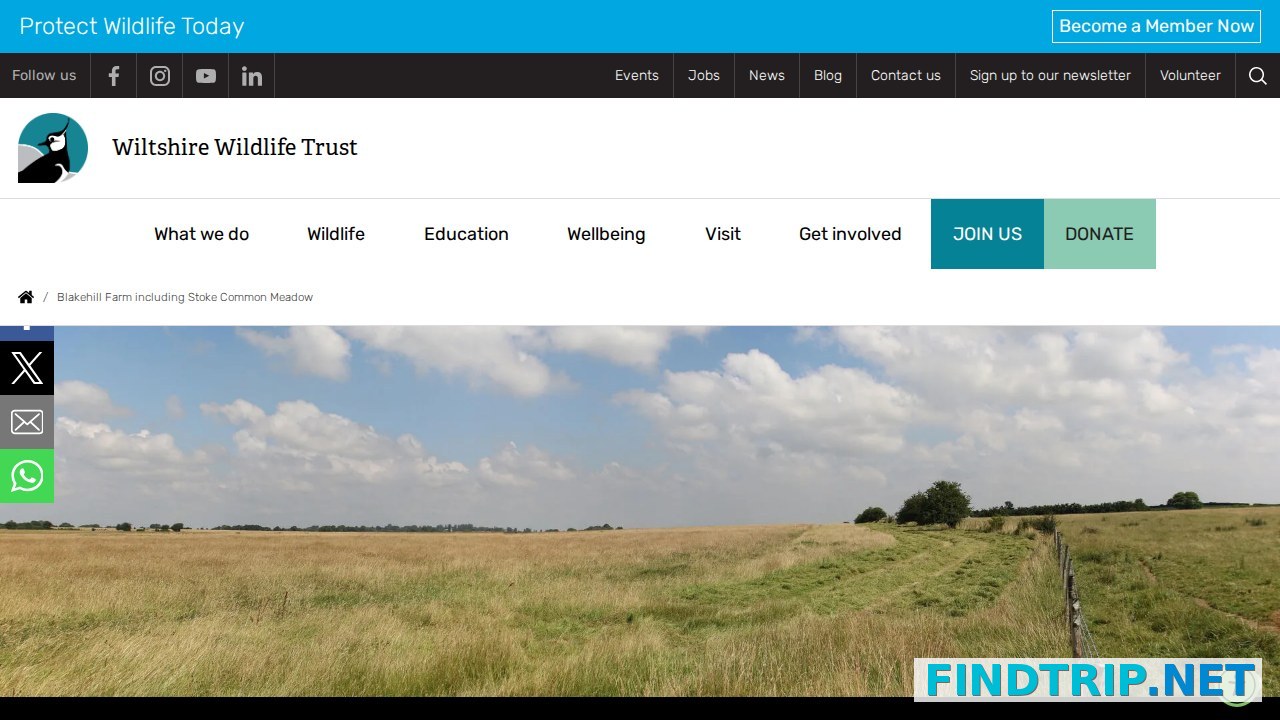
Once a crucial World War II military airfield where Royal Air Force Dakotas departed for European battlefields, Blakehill Farm has transformed into one of North Wiltshire's grandest grassland nature reserves. Spanning 264 hectares of painstakingly restored hay meadows and pasture, this unique reserve offers wide-open skies, rich historical heritage, and exceptional birdwatching opportunities. Whether you are planning a tranquil family stroll, a birdwatching excursion, or a historical walk along former runway paths, this guide covers everything you need to know before visiting.
What is Blakehill Farm Nature Reserve and who is it best suited for?
Blakehill Farm is a 264-hectare nature sanctuary managed by the Wiltshire Wildlife Trust, making it the largest open grassland site in North Wiltshire. The land once served as a busy military airfield during World War II, but today the concrete runways have been removed and replaced by sprawling species-rich hay meadows, including the adjacent Stoke Common Meadows, which is designated as a Site of Special Scientific Interest (SSSI).
This destination is particularly well-suited for:
- Wildlife and birdwatching enthusiasts: It provides a rare sanctuary for farmland birds such as the curlew, skylark, stonechat, whinchat, wheatear, barn owl, and short-eared owl.
- History enthusiasts: Visitors can trace the physical imprint of former wartime runways through subtle shifts in vegetation and land contour.
- Visitors with mobility needs or strollers: The reserve features remarkably flat terrain with smooth tarmac paths left over from its aviation past, making navigation effortless.
- Photographers: Big open horizons, dramatic weather shifts, and abundant summer wildflowers create magnificent photography backdrops.
Where is Blakehill Farm located and how do you get there?
Blakehill Farm is situated in the Borough of Swindon region, just outside the historic town of Cricklade in England (SN6 6RA).
To reach the site:
- By Car: The reserve entrance is clearly signposted off the B4040 (Malmesbury Road), positioned between Minety and Cricklade. Drivers can pull directly into the small dedicated car park located right at the reserve entrance.
- By Bicycle: While there are no dedicated cycle racks inside the site, Blakehill Farm is easily accessible via National Cycle Network Route 45, which passes nearby through Cricklade.
- By Foot: Pedestrians coming from Cricklade or surrounding rural paths can access the open perimeter via local footpaths.
Do you need to book tickets or pay an entry fee in advance?
There is no entry fee and no advance ticket booking required to visit Blakehill Farm. The reserve is free to access for the general public year-round as part of Wiltshire Wildlife Trust’s mission to connect communities with nature.
While the general walking paths remain accessible at all times, visitors arriving by car should note that the main vehicular gate and accessible car park are locked at 5:00 PM. If you are planning an evening visit to spot roosting owls or late-summer sunsets, ensure your vehicle is parked outside the gated area prior to dusk.
What practical costs and accessibility features should you expect on-site?
Visiting Blakehill Farm is entirely free of charge, with complimentary parking available at the main entrance. Because the site is preserved in a low-impact natural state, facilities on-site are minimal, focusing primarily on habitat preservation and accessible trail infrastructure.
Key practical details include:
- Wheelchair and Pushchair Accessibility: The reserve is exceptionally flat. The kissing gates feature RADAR lock access (marked with a red padlock symbol; note that the gate is not locked to RADAR key holders and can be opened for wider access).
- Restrooms and Catering: There are no public toilets or cafes on-site. Visitors looking for food or hot drinks can visit nearby reserves managed by the Trust, such as Lower Moor Reserve (approx. 3 miles away), which features the Dragonfly Café.
- Seating and Shelter: Benches are placed periodically along the primary paths, though shelter from rain or strong winds is limited due to the wide, open grassland topography.
Is Blakehill Farm suitable for families, and what rules must visitors follow?
Blakehill Farm is an excellent destination for families with young children due to its wide, level pathways and clear sightlines, which make pushing a pram or walking with young kids stress-free. Children often enjoy learning about the site's wartime past while spotting butterflies and large birds of prey.
However, visitors must adhere to one critical rule: No dogs are permitted anywhere on the reserve.
This strict prohibition is enforced to protect vulnerable ground-nesting birds (such as skylarks and curlews) and to prevent disturbance to the grazing cattle and sheep used by the Trust to manage the meadow grass naturally. Families traveling with pets should choose alternative dog-friendly trails nearby in North Wiltshire.
What are the best times to visit and what wildlife can you spot?
While the reserve offers serene views throughout the year, the spring and summer months (April through August) are widely considered the ideal season to visit.
During these months, you can experience:
- Meadow Wildflowers: The fields fill with colorful species like oxeye daisies, bird's-foot-trefoil, ladies bedstraw, great burnet, and adder's-tongue fern. Rare species like spiny restharrow and dyer's greenweed can also be found.
- Butterflies & Insects: Vibrant populations of marbled white, small copper, brown hairstreak, and common blue butterflies flutter across the grass tops.
- Avian Activity: Listen for skylarks singing high above the fields or watch for kestrels hovering over the meadow in search of field voles. In late afternoon or winter twilight, keep an eye out for barn owls and short-eared owls quartering low over the grass.
- Conservation Management in Action: In July, after skylarks have finished nesting, the Trust harvests hay using traditional methods before introducing livestock for late-summer conservation grazing.
What should you check on the official website before heading out?
Before embarking on your trip, it is advisable to check the Wiltshire Wildlife Trust official website or their dedicated social media channels.
Key details to double-check include:
- Livestock Grazing Zones: Temporary electric fencing or cattle movements may occasionally alter access along specific internal field boundaries.
- Seasonal Work Days & Volunteering: The site frequently hosts habitat restoration days, bramble clearing, or botanical surveys that might mean short-term activity in certain meadow sections.
- Weather Warnings: Because Blakehill Farm consists of wide, exposed grassland, high winds or heavy winter rain can make the open space challenging; checking local weather conditions helps you dress appropriately with windproof layers or sun protection.
How is the location tracking code GB1786640968642 used for visiting Blakehill Farm?
The unique location tracking identifier GB1786640968642 serves as a standardized reference within global travel and geographic indexing databases for Blakehill Farm Nature Reserve in the United Kingdom.
For travel coordinators, digital map applications, and local tourism services, this alphanumeric code ensures accurate geocoding of the reserve’s entry point in Wiltshire (Borough of Swindon / Cricklade district). Using standardized destination codes prevents confusion with other farm properties across Great Britain and allows travel systems to provide precise routing, environmental boundary data, and accurate visitor information directly to your navigation device.