Burngate Purbeck Stone Centre: Accessibility Guide for Wheelchair Users and Older Visitors
Honest accessibility guide to Burngate Purbeck Stone Centre in Dorset: confirmed site layout, unconfirmed access details, and key questions to ask.
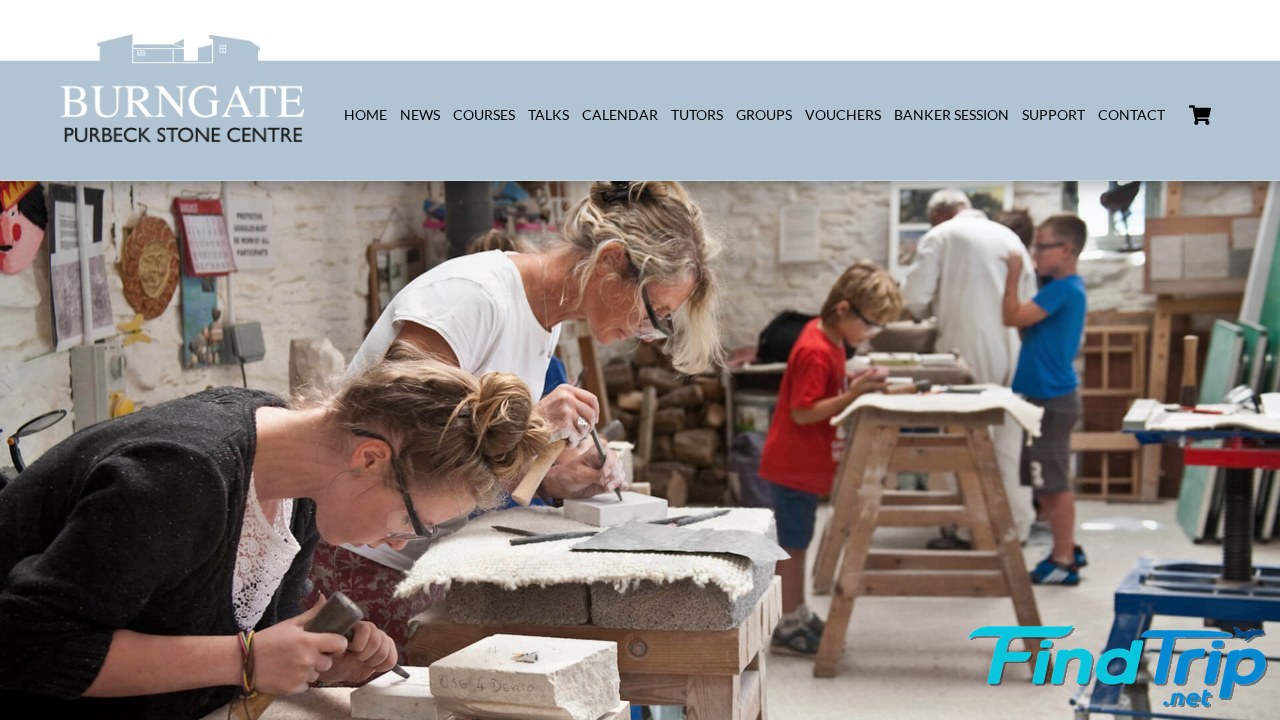
This guide looks strictly at physical accessibility at Burngate Purbeck Stone Centre for wheelchair users, visitors with reduced mobility, and older adults. It is not a full review of the tuition quality, creative programmes, or local scenery. Because specialist craft workshops in rural Dorset vary widely in layout, the sections below separate what the centre publicly confirms about its site from the practical access details that remain unconfirmed before you travel.
What Burngate Purbeck Stone Centre Confirms About Its Site
Located on Kingston Road, Langton Matravers, Swanage, Dorset BH19 3BE, England, Burngate Purbeck Stone Centre operates as a small charitable trust dedicated to sharing traditional Purbeck stoneworking skills. While its website does not include a dedicated accessibility statement, several operational and site details help paint an honest picture of what to expect on arrival.
First, the centre states that it runs courses "for people of all ages and abilities," welcoming complete beginners alongside experienced practitioners, as well as families, friends, and solo visitors. In the context of a craft school, phrasing like "all abilities" typically describes creative and technical skill levels rather than physical mobility access. Still, it signals an instructional ethos geared toward adapting tuition to individual learners rather than running a rigid, high-pressure environment.
Second, the venue outlines its core physical layout. The site has been developed to house a meeting room, two covered work spaces, and a well-equipped workshop accommodating groups of up to twenty. From an access standpoint, a maximum group size of 20 suggests a contained, manageable workspace rather than a sprawling industrial yard. The presence of covered work spaces also means stone carving does not always take place out in exposed weather, while most regular courses—covering creative carving, sculpture, traditional masonry, and lettercutting—are held within the specialist workshops.
Third, the surrounding geography gives clear clues about outdoor conditions:
- Summer countryside excursions: Alongside indoor carving, the centre's summer programme features drawing, creative writing, and geology courses. While many sessions stay on-site, several summer classes venture out into the surrounding countryside.
- Coastal and quarry landscape: Burngate sits beside fields, old quarry workings, and cliff tops overlooking the English Channel, with views east over Swanage Bay toward the Isle of Wight and north across Nine Barrow and Ballard Downs. The area forms part of an Area of Outstanding Natural Beauty (AONB), a Site of Special Scientific Interest (SSSI), and the Jurassic Coast UNESCO World Heritage Site.
- Disused underground quarry behind the site: Immediately behind the centre lies a former stone mine—locally called an "underground"—concealed by bushes and trees, with a slope ("the slide") that once connected to a capstan at ground level. Access to the mine is strictly prohibited for safety reasons and because it shelters protected Greater Horseshoe bats.
For older guests or anyone managing mobility aids, this mix tells an important story: the core teaching spaces are grouped around indoor and covered facilities, whereas any off-site summer fieldwork takes place in natural, coastal-adjacent Purbeck terrain that is likely to involve uneven ground.
Access Details That Remain Unconfirmed
Outside of its workshop capacity and rural setting, Burngate Purbeck Stone Centre publishes very little specific information about barrier-free access. Regular opening hours and course pricing are also omitted from the venue's general overview. If you use a wheelchair, walk with a stick or frame, or prefer level ground with frequent seating, the following essential features are currently unconfirmed:
The absence of these details does not mean the centre lacks accessible features—only that they cannot be verified from public information alone. In small rural charities and historic quarry settings across Dorset, doorways, gravel car parks, or raised workshop thresholds can vary significantly from room to room. Likewise, for older visitors who tire easily when standing, knowing whether you can carve comfortably from a sturdy stool or chair throughout a session makes a decisive difference between an enjoyable day and physical strain.
Questions to Ask Before Booking or Travelling
Because key physical details are unconfirmed, the most reliable step is to contact the centre directly before booking a place or setting out for Langton Matravers. You can reach Burngate Purbeck Stone Centre by telephone on 01929 439405 or by email at info@burngatestonecentre.co.uk.
When you speak with the team, asking targeted, practical questions tied to how a stone-carving workshop operates will give you clear answers quickly:
- Car park to workshop route: Where do visitors park on Kingston Road, and is there a level, firm surface (such as tarmac or paving rather than deep gravel or grass) leading directly to the main workshop and meeting room?
- Steps and door widths: Are the meeting room, two covered work spaces, and main workshop completely step-free, and are doorways wide enough for your specific wheelchair or mobility scooter?
- Accessible restroom access: Is there a step-free, wheelchair-accessible toilet on the same level as the teaching areas, and how far is it from the covered workspaces?
- Seated carving and bench height: Can beginners and experienced carvers work fully seated? If you use a wheelchair, are adjustable-height benches or clear knee space available beneath the stone-carving stands?
- Weight and handling of Purbeck stone: How heavy are the stone blocks typically used on beginner courses, and can tutors position or secure the stone for you if lifting is difficult?
- Summer countryside walks: If you are considering a summer drawing, creative writing, or geology session, does that specific date stay at the centre or head out into the surrounding fields and cliff-top paths? If it goes off-site, ask about total walking distance, stiles, gates, and steep gradients.
- Companions or carers: If you plan to attend with a companion who assists with mobility or handling tools, confirm in advance whether they can sit alongside you in the workshop space without exceeding the 20-person room layout.
Getting written or verbal confirmation on these points—especially for your exact course date and chosen workspace—removes guesswork on the day.
Do Not Assume Accessibility Without Checking First
A welcoming reputation and a commitment to teaching people of all ages and skill levels should never be confused with guaranteed physical accessibility. Burngate Purbeck Stone Centre sits in a working rural landscape shaped by historic Purbeck stone quarries, coastal fields, and specialist craft facilities—all elements that can introduce steps, uneven paths, or tight workshop layouts unless specifically adapted.
Until the centre publishes a clear access guide covering parking surfaces, step-free entry, accessible toilets, and seated workbench height, do not assume the site meets wheelchair or low-mobility requirements. Take five minutes to call 01929 439405 or email info@burngatestonecentre.co.uk with your specific needs before booking, so you can decide with complete confidence whether a workshop or summer session fits your visit.